Side Dishes
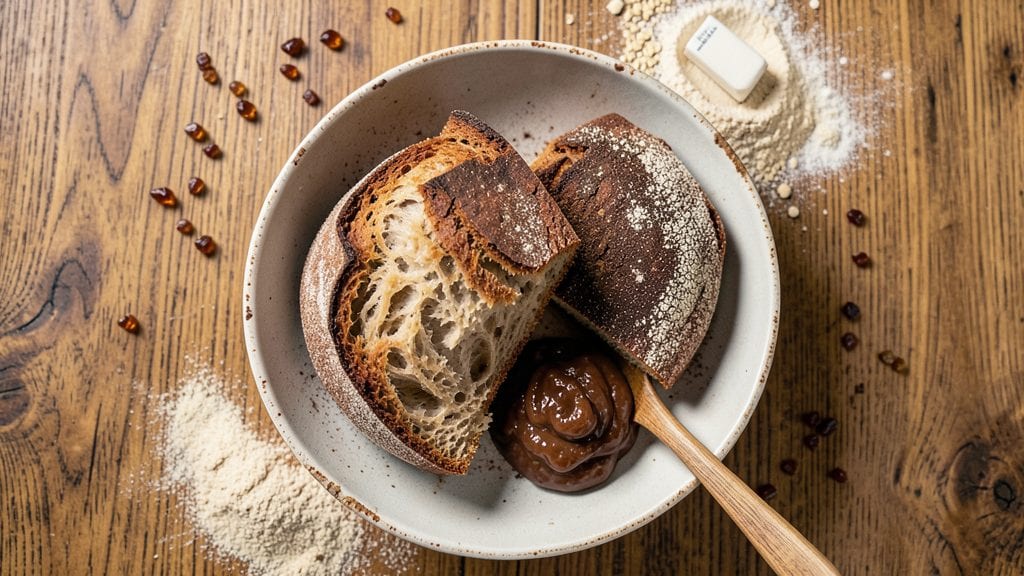
This authentic German rye bread recipe delivers the deep, tangy flavor and dense crumb that define traditional German baking—no shortcuts, just time-honored techniques. The secret lies in a long fermentation that develops complex sour notes, while a mix of caraway seeds and dark molasses creates that signature German depth.
I've perfected this version after years of testing, balancing authenticity with home-kitchen practicality.
The dough requires patience—24 hours of cold fermentation—but this slow process transforms simple ingredients into something extraordinary. You'll work with a stiff, wet dough that needs proper kneading and shaping to achieve that signature crusty exterior and dense, moist interior.
The result? A loaf with a tangy, slightly sweet flavor that pairs perfectly with butter, cheese, or even just on its own.
What makes this recipe truly authentic is the sour rye starter—a living culture that builds flavor over time. We'll use a portion of the starter in each batch to maintain its vitality, ensuring your bread develops that unmistakable German rye character.
The crust will be deep brown and crisp, while the crumb remains tender with pockets of air from proper fermentation.
This bread is ideal for holiday tables, sandwiches, or simply enjoying with a spread of German cheeses and cured meats. Once you master this technique, you'll never settle for store-bought rye again. Let's get started on creating your own authentic German masterpiece.
Ingredients for authentic german rye bread
Simple yet transformative ingredients for authentic German rye bread with deep flavor and perfect texture.
| Ingredient | Amount | Notes |
|---|---|---|
| Sour Rye Starter 🍞 | 1 ½ cups | Active, bubbly culture |
| All-Purpose Flour 🌾 | 3 cups | Bread flour preferred |
| Dark Rye Flour 🌾 | 2 cups | Ensures authentic flavor |
| Whole Wheat Flour 🌾 | ½ cup | For texture and nutrition |
| Dark Brown Sugar 🍚 | ¼ cup | Enhances sweetness |
| Active Dry Yeast 🍞 | ½ tsp | Ensure freshness |
| Caraway Seeds 🌿 | 1 tbsp | Toasted for depth |
| Dark Molasses 🍯 | ½ cup | Signature tangy flavor |
| Unsalted Butter 🧈 | ¼ cup | Cold, cubed |
| Warm Water 💧 | 1 ½ cups | 105°F for activation |
| Diamond Crystal Kosher Salt 🧂 | 1 ½ tsp | Fine grain preferred |
| Cornmeal 🌽 | ¼ cup | For dusting |
The sour rye starter is non-negotiable for authenticity—maintain your own culture or source from a trusted German bakery. King Arthur or Bob's Red Mill offer excellent dark rye flour, but if you're in Germany, grab Pumpernickel flour for that classic depth. Caraway seeds should be lightly toasted in a dry pan to amplify their aroma. Dark molasses adds that signature tang, so Gund or Blackstrap are your best bets—avoid the lighter varieties. The butter matters too; Plugrá or Land O'Lakes work well, but keep it cold when mixing to prevent melting during fermentation.
No dark rye flour? Substitute half with whole wheat flour, but expect a slightly different texture. Short on molasses? Barley malt syrup or honey at half the amount works in a pinch. The yeast must be active dry, not instant—this recipe relies on its slow activation. For a gluten-free version, replace flours with a 1:1 GF blend and extend fermentation by 2 hours. The water temperature is critical—105°F activates the yeast without killing it. Use a thermometer if your kitchen isn't consistent.
This dough keeps for 3 days in the fridge, covered tightly. For longer storage, freeze shaped loaves for up to 3 months—thaw at room temp before baking. The starter can be stored in the fridge for 1 week or frozen for 3 months. Once baked, bread stales faster than most—toast or reheat slices in a dry pan to revive texture. Slice with a serrated knife for clean cuts, and always store wrapped in a cotton towel to prevent drying.
Why You'll Love This Recipe
- No-Knead Magic: I swear by this—just mix, let it rise, and bake. That sour rye starter does all the heavy lifting while you sip coffee.
- Deep, Tangy Crunch: The dark rye flour and brown sugar give it a molasses-kissed bite that sticks around. Honestly, it’s the kind of bread you’ll eat just to hear it crack.
- Breakfast to Brunch: Toast it thick for a hearty breakfast, tear it into sandwiches for lunch, or serve it warm with butter at brunch. It’s my go-to for lazy mornings.
- Budget Baking Gold: Uses pantry staples and stretches into a week’s worth of meals. Between us, this is the only bread I bake that actually pays me back.
Step-by-step instructions for authentic German rye bread
Here's the traditional method that delivers that signature German rye flavor and texture you crave.
Activate the Sour Rye Starter
In a medium bowl, combine the 1.5 cups of sour rye starter with 1.5 cups of warm water (about 105°F). Let this mixture sit at room temperature for 15-20 minutes until it becomes bubbly and slightly expanded. This activation step is crucial—it jumpstarts your fermentation and develops that authentic tangy flavor that sets German rye apart.
I like to check the starter by gently pressing the surface with my finger. When it springs back with small bubbles breaking the surface, it's ready. If it doesn't show these signs of activity after 20 minutes, give it another 10 minutes. Remember, temperature matters—if your kitchen is cold, the starter may need 30 minutes or more to activate properly.
Mix the Dough with Wet and Dry Ingredients
In the bowl with your activated starter, add the 0.5 cup of dark molasses and 0.25 cup of dark brown sugar. Stir until these ingredients are completely dissolved. In a separate large bowl, whisk together the 3 cups of all-purpose flour, 2 cups of dark rye flour, 0.5 cup of whole wheat flour, 1.5 teaspoons of diamond crystal kosher salt, and 0.5 teaspoon of active dry yeast.
Create a well in the center of your dry ingredients and pour in the wet starter mixture. Using a wooden spoon or dough whisk, gradually incorporate the dry ingredients into the wet mixture. Once combined, add the 0.25 cup of cold, cubed unsalted butter and mix until it begins to break down into small pieces. The dough will be quite sticky at this stage—this is normal with rye bread.
Knead and Develop the Gluten
Transfer the dough to a lightly floured surface and begin kneading for about 8-10 minutes. I find using the "fold and turn" method works best for this sticky dough—fold one third of the dough toward you, then fold the other two thirds over the first third, and turn the dough 90 degrees. Repeat this process for about 100 folds total, or until the dough becomes smoother and more elastic.
You'll notice the dough will still be quite sticky, but it should hold together better. The gluten development is crucial here—it creates that beautiful open crumb structure that authentic German rye bread is known for. If the dough feels too sticky to handle, wet your hands slightly to prevent sticking while kneading.
First Rise and Prepare for Shaping
Lightly oil a large mixing bowl and transfer your dough to it. Cover the bowl with a damp kitchen towel and let the dough rise at room temperature for 2-3 hours, or until it has roughly doubled in size. The dough should feel light and slightly springy when pressed gently with your finger.
During this rise, I like to check the dough every 30 minutes after the first hour. German rye bread benefits from a longer fermentation, which develops more complex flavors. If your kitchen is particularly warm, the dough may rise faster—keep an eye on it to prevent overproofing. The ideal dough should have small bubbles throughout and feel slightly puffy on top.
Shape and Second Rise
Generously dust a clean work surface with the 0.25 cup of cornmeal. Turn out the risen dough and shape it into a round loaf about 8 inches in diameter. To shape, gently gather the edges toward the center and roll the dough back and forth on the cornmeal-dusted surface to create a smooth, taut surface.
Place the shaped loaf on a parchment-lined baking sheet, seam side up. Cover loosely with the damp towel and let it rise for another 1-2 hours, or until it has risen about 50% more. The dough should feel firm when pressed gently. This second rise allows the gluten to relax slightly, which helps create that beautiful open crumb structure when baked.
Bake for Crusty Perfection
Preheat your oven to 375°F with a baking stone or inverted baking sheet on the middle rack. This helps create steam during baking, which is essential for that crisp crust and open crumb. Once preheated, score the top of your loaf with a sharp serrated knife in a crosshatch pattern, about ½ inch deep.
Bake the bread for 40-45 minutes, until the crust is deep golden brown and sounds hollow when tapped on the bottom. The internal temperature should reach 190-200°F. I like to check the color of the crust every 5 minutes after 35 minutes—German rye bread should have that characteristic dark, almost mahogany crust that's crisp to the touch.
Cool and Enjoy
Remove the bread from the oven and transfer it to a wire rack to cool completely. This cooling step is important—it allows the steam inside the bread to escape, which prevents a gummy texture. While it's tempting to slice into that warm, fragrant loaf immediately, resist the urge. The bread will continue to develop its full flavor as it cools.
Once completely cool, slice the bread and serve with your favorite butter or jam. The aroma alone should transport you to a traditional German bakery. Each slice should have that beautiful open crumb with pockets of air, and the flavor should be a perfect balance of sweet molasses, tangy rye, and subtle caraway spice. Store any leftovers in an airtight container for up to 5 days, or freeze for longer storage.
Pro Tips For Making Authentic German Rye Bread
- Hydrate the Starter First: Let that sour rye starter sit in warm water (about 1:1 ratio) for 30 minutes before mixing—it’ll wake up the yeast and make the dough smoother. I used to just toss it in dry; now my bread has that proper tang without fighting the mixer.
- Weigh Your Rye Flour: Dark rye flour is deceptive—scooping it leads to uneven batches. Use a kitchen scale for the dark rye and whole wheat; even a 5-gram difference throws off the balance. (Yes, I’ve learned this the hard way after a dense, flavorless loaf.)
- Skip the Over-Kneading: This isn’t wheat dough—handle it just enough to combine. Overwork it, and the gluten tightens, making the bread gummy. A few gentle stretches and folds (3-4 max) keep it rustic and chewy, like it should be.
- Steam the Oven: Place a metal bowl of boiling water on the oven rack for the first 15 minutes of baking—this mimics the steam of a brick oven and gives you that crisp crust. I was skeptical until I tried it; now my bread has that perfect snap. (Pro tip: Use a spray bottle if you’re short on bowls.)
Wine and beer pairings for this authentic german rye bread
German Beer Pairings
Authentic German rye bread pairs beautifully with classic German beers that complement its deep, tangy flavors. A Weissbier (wheat beer) like Weihenstephaner Hefeweissbier is my top recommendation—its citrusy notes and slight tartness cut through the bread's richness.
The effervescence also cleanses your palate between bites. For something bolder, try a Dunkel, like Ayinger Altbairisch Dunkel, which has malty sweetness that harmonizes perfectly with the molasses and caraway. 🍺
German Wine Complements
While beer is traditional, German wines offer surprising depth. A Spätburgunder (Pinot Noir) from the Mosel or Baden regions works remarkably well—the earthy fruit and subtle spice mirror the bread's complexity.
For white wine lovers, a Riesling Kabinett with its crisp acidity and stone fruit notes provides refreshing contrast. Avoid heavy reds or oaky whites that would overpower the delicate rye flavors.
Regional German Pairings
In Bavaria, pair your rye with Helles Lager—its clean maltiness balances the bread's tang. For Northern Germany, try a Gose beer with coriander and salt notes that echo the caraway seeds.
In Rhineland regions, a Kölsch with its light body and hoppy finish creates a perfect balance. Each pairing reflects the local beer traditions that developed alongside regional bread varieties.
Non-Alcoholic Options
For non-drinkers, German apple cider (like Rothaus) is an excellent choice—its slight tartness complements the molasses perfectly. Sparkling water with lemon slices also works well, especially if you add a pinch of salt to mimic beer's mineral notes.
For something richer, try German coffee**—a classic pairing in traditional German cafés where rye bread is often served with breakfast.
Cheese Pairings
German cheeses elevate this bread to new heights. Limburger with its creamy, tangy profile creates a perfect contrast to the bread's crusty exterior. Tilsiter, a semi-hard cheese with nutty flavors, also pairs beautifully.
For something lighter, Bergkäse (Alpine cheese) adds a fresh, slightly sweet note. Serve these at room temperature for the best texture and flavor harmony. 🧀
Nutrition facts
Frequently asked questions
How do I make a sour rye starter for this recipe?
Mix 1 cup dark rye flour with 1 cup warm water (not hot) in a jar. Cover loosely and let sit at room temperature for 24 hours. Stir daily until bubbly and tangy (about 3-5 days). Keep a small portion for each new batch to maintain the culture.
Can I substitute dark rye flour if I don't have it?
Yes, but expect a slightly different texture. Replace 1 cup dark rye flour with ½ cup whole wheat flour + ½ cup all-purpose flour. For deeper flavor, add 1 teaspoon extra caraway seeds. The bread will be lighter but still delicious.
Why does my German rye bread turn out dense instead of open and airy?
This usually happens from underproofing (not enough fermentation time) or over-kneading. Let the dough rise until it's 50-100% larger and feels springy. For better gluten development, knead just until smooth (8-10 minutes) rather than until firm. Patience is key—longer fermentation creates that signature open crumb.
How long should I ferment the dough at room temperature?
The recipe calls for 2-3 hours at room temperature, but for maximum authenticity, extend to 4-6 hours if your kitchen is warm. The longer fermentation builds deeper flavor. After shaping, do a 1-2 hour second rise. Cold fermentation (48 hours in fridge) also works but requires adjusting baking time.
What's the best way to store leftover German rye bread?
Wrap cooled slices in a cotton towel and place in an airtight container to keep moist. It stays fresh for 3-4 days at room temp. For longer storage, freeze the whole loaf (3 months) or individual slices (1 month). To revive stale bread, warm slices in a dry pan for 1-2 minutes per side.