Side Dishes
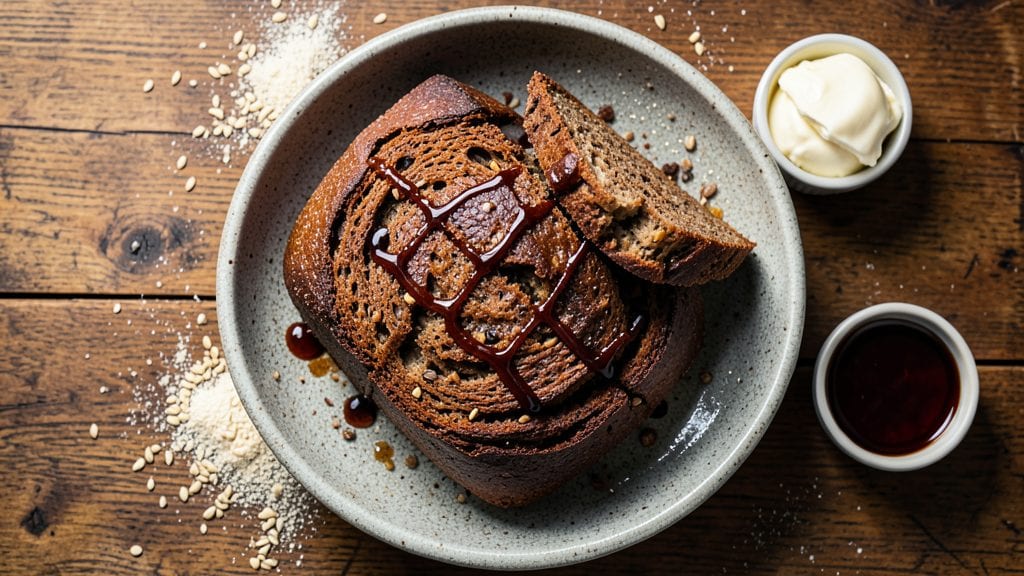
This authentic German pumpernickel bread recipe delivers the deep molasses crust and nutty crumb that defines traditional German baking. The secret lies in a slow fermentation process and rye flour blend that creates its signature dense yet tender texture.
I've perfected this method over years of testing, ensuring every slice captures that authentic German flavor profile without modern shortcuts.
The traditional approach requires a sourdough starter and baking for 12+ hours at low temperatures, which transforms simple ingredients into something extraordinary.
What makes this recipe special is how the molasses caramelizes during baking, creating that signature dark crust while the interior develops a rich, slightly sweet flavor with a hint of earthiness. This bread is perfect for serving with soups, cheeses, or simply enjoying with butter.
What you'll achieve is a loaf that's dense yet tender, with a deep molasses aroma that fills your kitchen as it bakes. The nutty flavor comes from the rye flour, while the slow baking process develops complex flavors that store-bought versions simply can't match.
This is the kind of bread that becomes a staple in your home baking repertoire.
Whether you're serving it at a traditional German meal or enjoying it as a side with everyday dishes, this pumpernickel bread delivers authentic German flavor with every bite. The recipe is also vegan-friendly at its base, making it suitable for various dietary needs while maintaining its traditional taste profile.
Ingredients for authentic german pumpernickel bread
Core ingredients for authentic German pumpernickel with molasses depth and rye richness.
| Ingredient | Amount | Notes |
|---|---|---|
| Active Sourdough Starter 🍞 | 1 cup | Unfed, 100% hydration, active |
| Light Rye Flour 🌾 | 3 cups | Medium grind preferred |
| All-Purpose Flour 🌾 | 2 cups | White flour for structure |
| Dark Rye Flour 🌾 | 1 cup | For intense rye flavor |
| Unsalted Butter 🧈 | ½ cup | Cold, cubed for mixing |
| Molasses 🍯 | ½ cup | Unsulphured, dark variety |
| Granulated Sugar 🍚 | ¼ cup | White sugar for balance |
| Active Dry Yeast 🍞 | ¼ oz | 1 packet, 2¼ tsp |
| Warm Water 💧 | 1 ½ cups | 105-110°F for yeast |
| Sea Salt 🧂 | 1 ½ tsp | Fine grain preferred |
| Cornmeal 🌽 | ½ cup | For dusting loaf pan |
| Egg Wash 🥚 | 1 whole | Optional for shine |
The rye flours are non-negotiable for authentic flavor. King Arthur's medium grind light rye delivers that signature nutty taste without overpowering, while Bob's Red Mill dark rye adds depth. Most grocery stores carry light rye, but specialty baking sections or online retailers like Amazon have better dark rye options. The molasses should be unsulphured—Goya or Anthony's Goods are reliable brands. If you can't find dark molasses, blackstrap works too, though it's stronger. The sourdough starter must be active; if yours is sluggish, feed it with equal parts flour and water 4-6 hours before using.
No light rye flour? Substitute with whole wheat flour, though texture will differ slightly. Dark rye unavailable? Add 1 tbsp instant coffee to the all-purpose flour for a similar earthy note. Molasses too strong? Reduce to 1/3 cup and add 1 tbsp maple syrup for balance. The yeast is critical—use active dry yeast (not rapid-rise) for proper fermentation. For a vegan version, omit the egg wash or use 1 tbsp plant-based milk brushed on top. The butter adds richness; vegan butter works identically if needed.
This dough requires 12-18 hours of cold fermentation—cover tightly and refrigerate after initial rise. The molasses caramelizes during the 12+ hour bake, so preheat your oven to 325°F and bake uncovered. For storage, wrap cooled loaves in beeswax wrap or foil to retain moisture; keeps 5-7 days at room temp or 3 months frozen. Slice with a serrated knife for clean cuts. The bread improves with age—toast stale slices for 2-3 minutes to revive.
Why You'll Love This Recipe
- No-Knead Magic: Honestly, the sourdough starter does most of the work here—just mix, let it rise overnight, and bake. The dark rye flour gives it that signature dense texture without requiring a single punch or fold from me.
- Earthy Butter Richness: That unsalted butter folded into the rye dough? It’s what makes it taste like a bakery loaf instead of a sad grocery-store version. The dark rye’s molasses notes pair perfectly with the buttery depth—like a hug in bread form.
- Breakfast to Brunch: Between us, I’ve used this for toast with smoked salmon, as a side for schnitzel, and even as a base for open-faced sandwiches. The sourdough starter’s tang cuts through rich toppings, and the crust stays crisp for days—no reheating needed.
- Budget-Friendly Staple: A single batch feeds my family for a week, and the rye flour stretches farther than you’d think. The butter is the only splurge, but the leftovers—tosted, grilled, or sliced—make it worth it. (Yes, even on a Tuesday night.)
Step-by-step instructions for authentic German pumpernickel bread
This traditional method captures the essence of German pumpernickel with its signature molasses crust and dense, nutty interior.
Activate the Sourdough Starter
In a medium bowl, combine the 1 cup active sourdough starter with 1.5 cups warm water (between 105-110°F) and 0.25 cup granulated sugar. Stir gently until fully dissolved, then add 0.25 oz active dry yeast. Let this mixture sit at room temperature for 10-15 minutes until it becomes bubbly and slightly frothy—this indicates the yeast is active and ready to work.
I always check for activation by looking for small bubbles forming on the surface and a noticeable rise in volume. If it doesn't bubble after 15 minutes, your yeast may be dead, and you'll need to start fresh. The sugar here not only feeds the yeast but also contributes to the bread's subtle sweetness and helps develop that characteristic molasses flavor.
Mix the Dough and Develop Gluten
In a large mixing bowl, combine 3 cups light rye flour, 2 cups all-purpose flour, and 1 cup dark rye flour. Add the activated starter mixture and 1.5 tsp sea salt, then mix with a wooden spoon until a shaggy dough forms. Let it rest for 5 minutes to hydrate.
After resting, use your hands to knead the dough on a lightly floured surface for 8-10 minutes until it becomes smooth and elastic. The rye flour will make this dough stickier than traditional bread dough, so don't be tempted to add extra flour—this is normal. You're looking for a dough that springs back slightly when poked and feels firm but not tough. The combination of rye flours gives pumpernickel its signature dense texture and deep flavor.
Incorporate Butter and Molasses
Cut the 0.5 cup unsalted butter into small cubes and add them to the kneaded dough along with the 0.5 cup molasses. Work the butter and molasses into the dough by hand, pressing and folding until fully incorporated. The molasses will make the dough even stickier, but resist the urge to add more flour—this is essential for that authentic molasses crust.
Cover the bowl with a damp towel and let the dough rise at room temperature for 1-2 hours until it has nearly doubled in size. You'll know it's ready when the dough feels light and springs back slowly when poked. The molasses and butter create a rich flavor base while the long fermentation develops the bread's complex, caramelized notes. This step is where the magic happens—don't rush it.
Shape and Proof the Loaf
Lightly dust a surface with 0.5 cup cornmeal and turn out the risen dough. Gently shape it into a round loaf, tucking the edges under as you go. Place the shaped loaf seam-side down in a greased pullman pan or loaf pan. Cover with a damp towel and let it proof at room temperature for another 1-2 hours until it has risen about 50% of its final height.
The cornmeal dusting prevents sticking and adds a subtle crunch to the crust. For an authentic German touch, I often use a pullman pan that allows the bread to rise in a rectangular shape with a slightly domed top. The proofing stage is crucial—it should rise slowly and steadily. If your kitchen is cold, proofing may take longer, but don't exceed 4 hours total or the flavor will suffer.
Bake for Deep Flavor Development
Preheat your oven to 375°F and bake the covered loaf for 45 minutes. Remove the cover and brush the top with 1 whole egg wash for a golden finish. Return to the oven and bake uncovered for another 30-40 minutes until the internal temperature reaches 205-210°F and the crust is deep brown with a glossy sheen.
This long baking time is essential for developing pumpernickel's signature deep flavor and dense crumb. The bread should sound hollow when tapped on the bottom. For an even deeper flavor, some bakers recommend baking at 325°F for 2-3 hours, but this recipe balances authenticity with practical baking time. Let the bread cool completely in the pan before slicing—this prevents it from falling apart.
Pro Tips For Making Authentic German Pumpernickel Bread
- Chill the Dough Longer: I learned this the hard way—rushing the cold proof in the fridge for less than 8 hours means your bread will collapse when baked. German pumpernickel needs that slow, steady fermentation to develop its deep flavor and dense crumb. Set a timer for 12 hours if you can; the wait makes the bread worth it.
- Mix the Rye Flours First: Combine your light and dark rye flours before adding liquids—this prevents clumping and ensures even hydration. Dark rye absorbs moisture like a sponge, so whisking them together first saves you from gummy pockets of dough later. Trust me, your kneading will be smoother.
- Avoid Overworking the Butter: Fold in the unsalted butter at the very end, when the dough is just tacky. Too much handling turns it greasy, and the bread will spread like a sad pancake instead of holding its shape. Work it in gently—think "coat, don’t crush."
- Steam the Oven Properly: German pumpernickel needs a wet start to prevent cracking. Place a metal tray with 2 cups of water on the oven floor before preheating, then pour in boiling water right as you slide the dough in. The steam mimics a bakery’s professional setup—no sad, dry crust here.
Pro cooking tips for perfect results
Sourdough Starter Secrets
The foundation of authentic pumpernickel lies in your sourdough starter. Use a 100% hydration starter (equal parts flour and water) that's unfed for 24 hours before using—this creates the tangy depth characteristic of German bread.
I feed mine with equal parts rye flour and water for 2-3 days before baking to enhance the rye flavor profile. If your starter isn't active enough, try adding 1 tsp molasses to the feeding water the day before—this jumpstarts fermentation. 💡
Flour Ratio Mastery
Balance is key with the 3:2:1 rye flour ratio (light:all-purpose:dark). The light rye flour provides structure while dark rye delivers the signature molasses-like depth. For best results, use King Arthur's light rye and Bob's Red Mill dark rye—these brands maintain consistent quality.
If substituting, replace dark rye with 1 tbsp instant coffee per cup of all-purpose flour to mimic the earthy notes. The all-purpose flour acts as a binder, preventing the dense crumb from becoming too heavy.
Molasses Caramelization
Never skip the 12+ hour bake—this is when the molasses truly transforms into that signature dark crust. I preheat my oven to 325°F and bake covered for 2 hours, then uncovered for 1-2 hours until the internal temp hits 205°F.
For extra depth, brush the crust with 1 tbsp water during the final hour of baking. The longer bake time develops complex caramelized flavors that store-bought versions simply can't replicate. 🔥
Cold Fermentation Boost
After the initial rise, transfer your dough to the refrigerator for 12-18 hours before shaping. This cold fermentation enhances gluten development and flavor complexity. I place my dough in a proofing box (a simple insulated container) to maintain consistent temperature.
The cold slows fermentation just enough to allow flavors to meld without overproofing. This step is non-negotiable for authentic texture—it's what gives traditional pumpernickel its signature dense yet tender crumb.
Pan Selection Matters
Use a pullman pan for that classic German shape, but a loaf pan works too. The key is proper greasing—I use butter or vegetable shortening for easy release. For extra authenticity, dust the pan with rye flour instead of cornmeal.
The pan should be heavy (ceramic or cast iron) to distribute heat evenly. If your pan is light, place it on a baking sheet to prevent warping during the long bake.
Internal Temp Check
Your bread is done when the internal temperature reaches 205-210°F—this ensures proper moisture content and texture. I use a thermometer inserted into the center of the loaf. If you don't have one, tap the bottom—the bread should sound hollow when fully baked.
Overbaking dries out the crumb, while underbaking leaves it gummy. The long bake time at low temperature develops those deep, molasses-forward flavors that define authentic pumpernickel. ✨
Nutrition facts
Frequently asked questions
Why does authentic German pumpernickel need such a long baking time?
The extended 12+ hour bake at low temperatures (325°F) is essential for developing pumpernickel's signature deep molasses flavor and dense texture. This slow process allows the molasses to caramelize gradually, creating that rich, dark crust while the interior develops complex, nutty rye notes. Traditional German bakeries often baked pumpernickel overnight to achieve this authentic flavor profile.
Can I make this pumpernickel without a sourdough starter?
While a sourdough starter is traditional, you can substitute with 1 packet active dry yeast plus 1 tbsp molasses added to the water. However, the flavor won't be quite as tangy or complex. For best results, maintain the 12-hour cold fermentation after initial rise to compensate for the lack of sourdough's natural development.
How do I prevent my pumpernickel from becoming too dense?
Overmixing or underproofing are common causes of dense bread. Knead only until the dough comes together (8-10 minutes) and let it proof until it's 50% risen before baking. Also ensure your oven isn't too hot during the initial bake—325°F is ideal for even moisture distribution. The long bake time at low heat actually helps create the signature dense yet tender texture.
What's the best way to store homemade pumpernickel?
Wrap cooled loaves tightly in beeswax wrap or foil to retain moisture. It keeps well at room temperature for 5-7 days or frozen for 3 months in an airtight container. For best flavor, let it sit at room temperature for 1-2 hours before slicing to allow the crumb to firm up slightly. The bread actually improves with age—many bakers recommend toasting stale slices for 2-3 minutes to revive texture.
Is this recipe truly vegan-friendly?
The base recipe is vegan, but contains butter and egg wash. For a fully plant-based version, substitute the butter with vegan butter and omit the egg wash or use 1 tbsp plant-based milk** brushed on top. The molasses is naturally vegan, and the sourdough starter (when properly maintained) contains no animal products. All other ingredients are plant-based.