Side Dishes
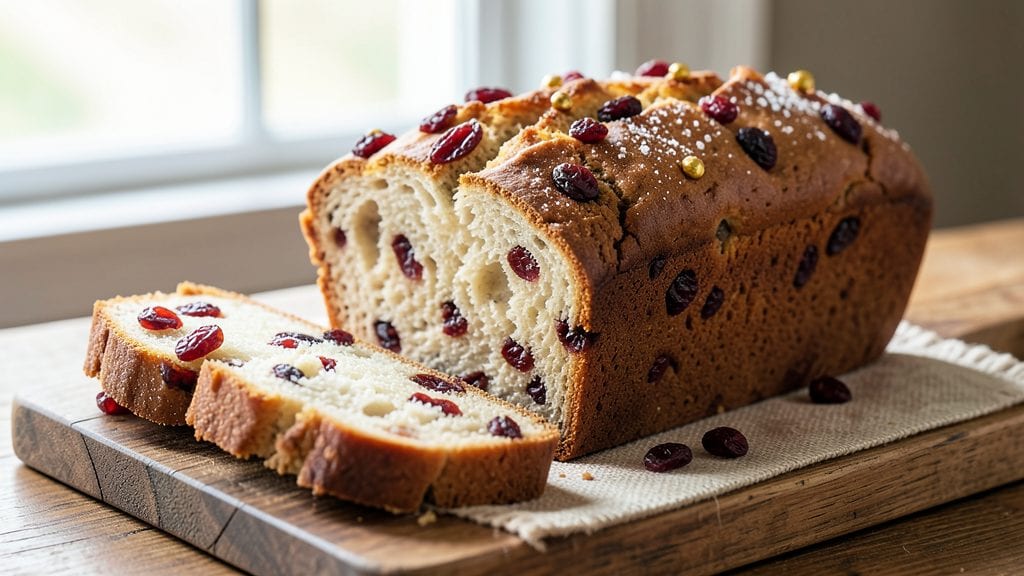
This Amish raisin bread recipe brings the heart of Pennsylvania Dutch country to your kitchen with its signature spice swirls and tender, golden crust. 🌟 The traditional method—layering sweet raisins and warm spices between soft dough—creates a bread that’s both comforting and impressive, perfect for holiday tables or everyday enjoyment.
What sets this bread apart is its foolproof technique, combining a simple dough with a rich, spiced raisin filling that bakes into caramelized perfection. No sourdough starter is needed—just basic pantry ingredients and a little patience for proofing.
The result is a loaf with a soft, pillowy interior and a crisp crust that holds up beautifully for slicing.
Baking this bread is an exercise in tradition, where the aromatic blend of cinnamon, nutmeg, and allspice infuses every bite. The raisins plump and soften just enough to create pockets of sweetness, while the dough stays tender and slightly sticky—a hallmark of Amish baking.
Serve warm with butter or jam for a taste of heritage.
This recipe delivers restaurant-quality results with minimal effort, making it ideal for beginners and experienced bakers alike. The key lies in precise timing and oven temperature, ensuring a loaf that’s golden brown, fragrant, and irresistibly soft. Let’s get baking!
Ingredients for amish raisin bread
Pantry staples meet Pennsylvania Dutch tradition in this fragrant, spice-infused raisin bread.
| Ingredient | Amount | Notes |
|---|---|---|
| All-Purpose Flour 🌾 | 6 cups | Sifted for best texture |
| Granulated Sugar 🍚 | ½ cup | Light brown preferred |
| Active Dry Yeast 🍞 | 2 ¼ tsp | Freshly opened package |
| Unsalted Butter 🧈 | ½ cup | Cold, cubed for dough |
| Warm Whole Milk 🥛 | 1 ¼ cups | 110°F for yeast activation |
| Large Eggs 🥚 | 1 whole | Room temperature |
| Sea Salt 🧂 | 1 ½ tsp | Diamond Crystal preferred |
| Seedless Raisins 🍇 | 2 cups | Plump, golden raisins |
| Ground Cinnamon 🌿 | 2 tsp | Freshly ground preferred |
| Ground Nutmeg 🌿 | ½ tsp | Freshly grated nutmeg |
| Ground Allspice 🌶️ | ½ tsp | Whole berries preferred |
| Vanilla Extract 🍯 | 1 tsp | Pure, high-quality extract |
| Honey 🍯 | 1 tbsp | Wildflower preferred |
The yeast is the foundation—use freshly opened active dry yeast for reliable activation. Penzeys or bulk bins at specialty stores offer the highest quality, but standard grocery brands work if stored properly. For the raisins, golden seedless raisins from Trader Joe's or Whole Foods provide the best balance of sweetness and texture. The spices—cinnamon, nutmeg, and allspice—should be freshly ground if possible, as pre-ground spices lose potency quickly. Whole spices can be toasted and ground at home for optimal flavor. The butter should be cold and cubed when added to the dough to prevent overdevelopment.
No golden raisins? Dark raisins or even dried cranberries work well, though the flavor profile shifts slightly. Substituting maple syrup for honey maintains moisture without altering the sweetness significantly. For nutmeg, mace can be used at half the amount, though it offers a distinct, slightly sweeter flavor. If you lack allspice, a mix of cloves and cinnamon (1/4 tsp each) approximates its warm, peppery depth. The vanilla extract should be pure, alcohol-based—imitation extracts contain artificial flavors that can compromise the bread's authentic taste. For a dairy-free option, substitute the butter with vegetable shortening, though the texture may differ slightly.
Store the dough in an airtight container at room temperature for up to 24 hours before baking to allow for slower fermentation and deeper flavor development. Once baked, the loaf keeps well at room temperature for 3 days wrapped in a clean kitchen towel, or 1 week in an airtight container. For longer storage, slice the bread and freeze the portions for up to 3 months. To revive, warm the slices in a 350°F oven for 5-10 minutes until toasted and fragrant. The bread reheats beautifully, making it perfect for quick breakfasts or snacks throughout the week.
Why You'll Love This Recipe
- No Yeast Struggles: I’ve made this bread more times than I can count, and honestly? The yeast never lets me down. Just toss in the warm milk, let that butter melt into the flour, and the dough comes together faster than you’d think—no kneading marathon required.
- Sweet Chewy Magic: That caramelized raisin-butter combo? It’s what turns this into a must-make. The sugar in the dough softens the raisins just enough so every bite has that warm, gooey pull—like a hug in bread form.
- Breakfast to Brunch: I swear by this for toast in the morning, but it’s also my go-to for holiday gatherings. Slice it thick, butter it up, and watch it disappear—whether it’s feeding the family or impressing guests.
- Budget-Friendly Staple: Five ingredients, zero fancy substitutions. The butter keeps it rich without breaking the bank, and a single loaf stretches for days. Freeze half for when you’re too tired to bake—just thaw and enjoy.
Step-by-step instructions for Amish raisin bread
Mastering this classic recipe delivers a tender crumb, fragrant spice swirl, and that signature Amish warmth in every slice.
👨🍳 Step 1: Activate the Yeast and Prepare the Dough Base
In a small bowl, combine the 1.25 cups warm whole milk (110°F), 0.5 cup granulated sugar, and 2.25 tsp active dry yeast. Let sit for 5-10 minutes until frothy—this confirms your yeast is alive and ready to work. The mixture should bubble vigorously; if it doesn't, your yeast may be expired.
In a stand mixer fitted with the dough hook, combine the 6 cups all-purpose flour and 1.5 tsp sea salt. Mix on low speed until evenly distributed. Add the yeast mixture, 1 whole large egg, and 1 tsp vanilla extract. Mix on medium speed until the dough begins to come together, about 3-4 minutes. The dough should be shaggy but cohesive at this stage.
🍳 Step 2: Incorporate Butter and Knead to Develop Gluten
Add the 0.5 cup cold unsalted butter, cut into cubes, to the mixer. Increase speed to medium and knead for 5-7 minutes until the dough is smooth and elastic. It should pull away from the sides of the bowl and form a windowpane when stretched—this indicates proper gluten development.
If the dough feels too sticky, add 1 tablespoon flour at a time until it's just slightly tacky to the touch. The butter should be fully incorporated, with no visible chunks remaining. This step creates the bread's signature tender crumb structure that makes it so irresistible.
🥘 Step 3: Prepare the Raisin-Spice Filling
In a medium bowl, combine the 2 cups seedless raisins, 2 tsp ground cinnamon, 0.5 tsp ground nutmeg, 0.5 tsp ground allspice, and 1 tbsp honey. Mix gently with your hands to evenly coat the raisins in the spice mixture. The raisins should be moist but not wet, with the spices clinging to their surfaces.
This filling is the heart of Amish raisin bread—its sweet-tart contrast with the warm spices creates that signature flavor profile. The honey helps bind the spices to the raisins, ensuring they distribute evenly throughout the bread when we incorporate them later.
⏰ Step 4: First Rise and Shape the Dough
Lightly grease a large bowl with vegetable oil and place the dough inside. Cover with a clean kitchen towel and let rise in a warm place for 1-1.5 hours or until doubled in size. The dough should feel light and springy when pressed gently with a finger—this indicates proper fermentation.
Punch down the risen dough to release air, then divide it into two equal pieces. Shape each piece into a 12-inch log by rolling the dough tightly from one end to the other. Place each log seam-side down in a greased 9x5-inch loaf pan. Create a well in the center of each log and press in half of the raisin-spice mixture, then gently fold the dough over the filling to create a swirl pattern.
🔥 Step 5: Second Rise and Bake to Golden Perfection
Cover the loaves with kitchen towels and let rise for another 30-45 minutes until they've expanded to fill about 75% of the loaf pans. Preheat your oven to 375°F while the dough rises. When ready, bake for 35-40 minutes until the tops are deep golden brown and a toothpick inserted comes out clean.
The bread should have a crisp crust with a soft, tender interior. For best results, let the loaves cool in the pans for 10 minutes before transferring to a wire rack to cool completely. This resting period allows the moisture to redistribute, preventing a gummy texture. Slice when completely cool for clean cuts and maximum enjoyment.
Pro Tips For Making Amish Raisin Bread
- TEST THE YEAST FIRST: Skip straight to mixing and you might end up with a brick instead of bread. Toss 1 teaspoon of yeast and 1 teaspoon of sugar into your warm milk (110°F) for 5 minutes—if it doesn’t foam, your yeast is dead. Trust me, I’ve made this mistake twice and learned the hard way.
- MEASURE FLOUR BY WEIGHT: That scoop-and-sweep method? It’s cheating you out of texture. Use a kitchen scale for the flour—1 cup of all-purpose flour actually weighs 125 grams, not the 160 grams you’d get from scooping. Your bread will rise higher and stay softer longer.
- SOAK RAISINS IN MILK: Dump dry raisins straight into the dough and they’ll stay like little rocks. Mix them with 2 tablespoons of warm milk and 1 teaspoon of sugar for 15 minutes first—they’ll plump up and distribute flavor evenly. I was skeptical until I tried it.
- BAKE WITH A TRAY OF WATER: This isn’t a brioche—don’t skip the steam. Place a shallow tray of boiling water in the lower oven rack while preheating. The extra moisture keeps the crust tender and prevents the bottom from drying out. Yes, even if you’re impatient like me.
Regional styles of this amish raisin bread
Pennsylvania Dutch Roots
The Amish raisin bread we know today traces back to the Pennsylvania Dutch communities of the 18th and 19th centuries. These settlers brought their European baking traditions—particularly German and Swiss influences—with them to America, adapting ingredients like raisins and warm spices to reflect local availability.
The bread’s signature spice swirls were inspired by **German Gewürzstangen (spice bread) but simplified for home kitchens using basic pantry staples. 🌟
In traditional Amish households, this bread wasn’t just sustenance—it was a centerpiece for communal meals, especially during harvest season. The raisins symbolized abundance, while the spices represented the warmth of shared labor.
Many families still bake it in cast-iron Dutch ovens passed down through generations, a nod to their ancestors’ resourcefulness with limited tools.
Ohio Amish Variations
While the Pennsylvania version dominates, Ohio Amish communities put their own spin on the recipe by adding chopped walnuts or pecans to the raisin-spice filling for texture contrast. They also often use molasses instead of honey in the dough, giving the bread a deeper, caramelized flavor.
The Ohio version tends to have a denser crumb, reflecting the region’s influence from Appalachian baking traditions.
Another Ohio twist is the double-layer loaf, where two dough logs are stacked with filling between them before baking. This creates a taller, more dramatic presentation—perfect for church potlucks or family gatherings. The extra layer also extends the bread’s shelf life, which was practical for large households.
Midwest Farmhouse Adaptations
In the Midwestern farmhouse kitchens where this bread became iconic, bakers often incorporated local honey from their own hives into the filling. This not only enhanced flavor but also supported self-sufficiency—a core value in Amish and Mennonite communities.
The honey’s moisture content also helped the raisins stay plump longer during storage. 🍯
Some Midwestern families add a thin layer of cinnamon-sugar to the top of the loaf before baking, creating a crispy, caramelized crust that’s especially popular in Iowa and Illinois. This technique was borrowed from Swedish kanelbullar traditions, showcasing how immigrant communities blended their culinary heritages.
Modern Homestyle Twists
Today’s home bakers often experiment with gluten-free flour blends (like a mix of almond and rice flour) to accommodate dietary needs, though the texture becomes slightly denser.
For a richer flavor, some replace half the milk with heavy cream, mimicking the texture of challah bread while keeping the Amish aesthetic. I’ve even seen versions with dried cherries or apricots instead of raisins for a fruitier profile. 🍒
For those short on time, quick-rise yeast (like Saf-Instant) cuts the first proofing time to 30 minutes, though purists argue it lacks the depth of traditional fermentation.
Another modern hack is using a stand mixer with a dough scraper to handle the sticky dough more easily—something our great-grandmothers would’ve envied! The key is balancing tradition with convenience without sacrificing that homestyle comfort**.
Nutrition facts
Frequently asked questions
Why does Amish raisin bread have a swirl pattern?
The swirl pattern isn't just decorative—it creates pockets of sweet raisin-spice filling throughout each slice. This design ensures every bite has that signature flavor combination while keeping the bread's signature tender crumb. Traditional Amish bakers developed this technique to maximize flavor distribution using simple shaping methods.
Can I make this bread without a stand mixer?
The dough can be mixed and kneaded by hand using a wooden spoon first, then your hands. For kneading, work the dough on a lightly floured surface for about 10-12 minutes until smooth and elastic. The key is patience—this method just requires more elbow grease than a mixer.
How do I know when the dough is properly risen?
Press your finger gently into the dough—it should spring back slowly (not immediately). For visual confirmation, the dough should double in size and feel light when lifted. If it collapses when poked, it needs more time. Remember: warm environments (like near the oven with the light on) speed up rising.
What if my bread turns out too dense?
Dense bread usually means over-kneading or under-proofing. Next time, knead just until smooth (about 5-7 minutes with a mixer) and ensure both rises reach their full potential. Also check your yeast—expired yeast can cause poor rise. For extra lightness, try adding 1 tsp baking powder to the dough.
Can I make this bread in a different pan shape?
Yes! While the recipe calls for 9x5-inch loaf pans, you can use round cake pans or even a cast-iron skillet. For a free-form loaf, shape the dough into a round and bake on a baking sheet. Just adjust baking time—smaller pans may need 20-25 minutes less time than loaf pans.