
Soups & Stews
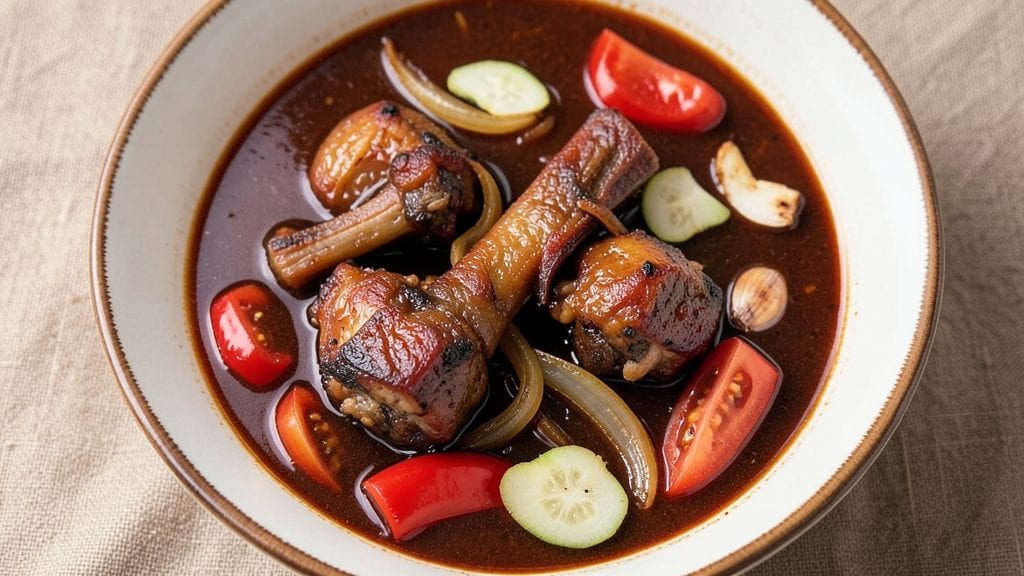
This African oxtail soup recipe transforms tough cuts into melt-in-your-mouth tenderness through slow simmering—a dish steeped in West African tradition. The rich, umami-packed broth develops layers of flavor from tomatoes, peppers, and aromatic spices, creating a hearty stew that’s as comforting as it is complex.
I’ve perfected this version to balance authentic techniques with home-cooking practicality, ensuring every spoonful delivers the deep, savory essence of the region.
The secret lies in the slow cooking process, where oxtail breaks down over hours into tender, flavorful pieces while infusing the broth with its natural richness. This isn’t just a soup—it’s a celebration of West African culinary heritage, where every ingredient plays a role in building depth and warmth.
Whether you’re preparing it for a family gathering or a cozy weeknight meal, the results are consistently restaurant-quality, with a texture that’s both velvety and satisfying.
What sets this recipe apart is its versatility—adjust the spice level to suit your taste, or incorporate local ingredients like palm oil or crayfish for regional variations. Served with steamed rice, fufu, or pounded yam, it becomes a complete meal that nourishes both body and soul.
The aroma alone will draw everyone to the table, promising a dish that’s as memorable as it is delicious.
Ready to master this slow-simmered classic? The process is straightforward, but the reward—a deeply flavorful, deeply satisfying bowl of soup—is worth every minute of patience. Let’s get started on creating a dish that carries the soul of West Africa into your kitchen.
Ingredients for african oxtail soup
Rich, aromatic ingredients that build deep umami—West African soul in every spoonful.
| Ingredient | Amount | Notes |
|---|---|---|
| Oxtail 🥩 | 3 lb | Cut into 2-inch pieces, trimmed |
| Yellow Onions 🧅 | 2 whole | Chopped, medium size |
| Red Bell Peppers 🌶️ | 2 whole | Chopped, seeds removed |
| Fresh Tomatoes 🍅 | 4 whole | Ripe, chopped, or 1 (28 oz) can |
| Fresh Ginger 🌿 | 2 tbsp | Grated, fresh root |
| Garlic Cloves 🧄 | 6 cloves | Minced, fresh preferred |
| Scotch Bonnet Peppers 🌶️ | 2 whole | Seeded, chopped, adjust heat |
| Palm Oil 🫒 | ¼ cup | Red palm oil preferred |
| Ground Cumin 🌿 | 1 tbsp | Toasted for depth |
| Ground Coriander 🌿 | 1 tbsp | Freshly ground preferred |
| Ground Nutmeg 🌿 | ½ tsp | Freshly grated |
| Thyme Leaves 🌿 | ½ cup | Fresh, chopped or dried |
| Bay Leaves 🍃 | 2 whole | Dried, standard size |
| Chicken Stock 💧 | 4 cups | Homemade or quality store-bought |
| Sea Salt 🧂 | 1 ½ tsp | Kosher or coarse grain |
| Black Peppercorns 🌶️ | ½ tsp | Freshly cracked |
The oxtail is non-negotiable—look for well-marbled cuts at specialty butchers or African markets. Costco or Whole Foods often carry it pre-cut, but if buying whole, ask for the tail section. Fresh ginger and Scotch bonnet peppers are essential for that signature heat and brightness. Trader Joe's sells frozen ginger if fresh isn't available, and for the peppers, dried habanero flakes work in a pinch (start with 1/4 tsp). Palm oil gives the signature color and richness—African markets or international sections carry it, or use vegetable oil if unavailable, though the flavor will differ slightly.
No palm oil? Olive oil or coconut oil works, but reduce by 1/4 cup to balance richness. Fresh ginger too spicy? Substitute 1 tbsp grated galangal for milder warmth. Prefer less heat? Remove Scotch bonnet seeds before chopping, or use jalapeños at half the amount. The tomatoes can be canned San Marzano (drained) if fresh isn't ripe. For the spices, toast cumin and coriander seeds whole in a dry pan for 30 seconds before grinding—this deepens their flavor dramatically. No thyme? Fresh oregano or marjoram bridges the gap.
This soup tastes even better the next day—plan ahead. Store in the fridge for 5 days or freeze for 3 months in airtight containers. The oxtail continues tenderizing over time, so reheat gently with a splash of broth. For serving, steamed jasmine rice or pounded yam soaks up every bit of that velvety broth. Double the batch—it disappears fast at gatherings, and leftovers reheat beautifully.
Why You'll Love This Recipe
- No-Chop Nightmare: The oxtail does the work for you—just sear and simmer. I toss in whole red bell peppers and ginger slices (peel removed) and let the pot do the magic while I sip tea. That’s it. The onions caramelize right in the broth, so you’re not stuck dicing anything.
- Deep Umami Magic: Between us, the oxtail’s gelatinous richness paired with fresh tomatoes and ginger? It’s ridiculously good. The bell peppers add a smoky sweetness that balances the heat, and honestly, the first spoonful makes you question why you haven’t made this weekly.
- Budget-Buster for Big Gatherings: Oxtail stretches like nothing else, and the veggies (onions, peppers, tomatoes) bulk it up without costing a fortune. I’ve fed six people for under $15 using this—plus, it’s the kind of dish that makes guests ask for the recipe, not the price tag.
Step-by-step instructions for African oxtail soup
Here's how to transform tough oxtail into melt-in-your-mouth richness with layers of spice and umami.
Parboil the Oxtail for Maximum Tenderness
Place the 3 lb oxtail in a large stockpot and cover with cold water by about 2 inches. Bring to a boil over high heat, then immediately reduce to a simmer. Cook for 30 minutes—this initial boiling breaks down collagen and prevents the meat from becoming tough. You'll know it's ready when the water returns to a gentle simmer and the oxtail pieces begin to float.
Drain the oxtail thoroughly and set it aside. This step is crucial—skipping it results in chewy, fibrous meat rather than the fork-tender texture we're after. While the oxtail drains, prepare your mise en place by chopping all vegetables and measuring your spices. Having everything ready ensures you won't miss any steps during the long cooking process.
Sauté Aromatics in Palm Oil Until Fragrant
Heat the 0.25 cup palm oil in a large Dutch oven over medium heat until shimmering but not smoking. Add the 2 whole chopped yellow onions and cook for 5 minutes until soft and translucent. The oil should coat the onions evenly—this is your flavor base.
Add the 2 whole chopped red bell peppers, 4 whole chopped fresh tomatoes, 2 tbsp grated fresh ginger, and 6 cloves minced garlic cloves. Stir frequently for 8-10 minutes until the vegetables soften and the mixture begins to darken slightly. This development of color means the natural sugars are caramelizing, building deep flavor. Here's where it gets aromatic—you'll notice the kitchen filling with the scent of sweet peppers and spicy ginger.
Build the Spice Base and Add Oxtail
Stir in the 1 tbsp ground cumin, 1 tbsp ground coriander, 0.5 tsp ground nutmeg, 0.5 cup chopped thyme leaves, and 2 whole bay leaves. Toast these spices for 1 minute until fragrant—this awakens their essential oils. Add the 2 whole seeded and chopped scotch bonnet peppers and cook for another 2 minutes to infuse their heat.
Return the drained oxtail to the pot, adding enough of the 4 cups chicken stock to just cover the meat. Bring to a simmer, then reduce heat to low and cover partially. The liquid should barely bubble—this gentle simmer is key to preventing the oxtail from toughening. Here's the thing—this soup needs time to develop its rich, velvety texture, so resist the urge to rush it.
Simmer Until Oxtail Falls Apart
Cook uncovered for 2.5 to 3 hours, maintaining a gentle simmer. Check occasionally and add more chicken stock if the liquid reduces too much—you want the oxtail to stay submerged. You'll know it's ready when a fork slides in easily and the meat begins to separate at the edges. The soup should have reduced to a thick, saucy consistency with deep color and complex aromas.
Season with the 1.5 tsp sea salt and 0.5 tsp freshly cracked black peppercorns, tasting as you go. The scotch bonnet peppers should add a subtle heat that lingers without overpowering. If the soup needs more body, remove the oxtail and reduce the cooking liquid by half before returning the meat. This technique intensifies the flavor without making the soup too thick.
Rest and Serve with Crispy Accompaniments
Let the soup rest for 15 minutes off the heat before serving. This resting period allows the flavors to meld completely and the oxtail to reabsorb some of its juices. Skim any excess fat from the surface if desired—though many African preparations embrace the richness.
Serve the oxtail soup hot with accompaniments like jollof rice or fufu to soak up the luxurious sauce. The contrast of the tender oxtail against the soft, starchy sides creates the perfect balance. Each spoonful should deliver layers of umami from the oxtail, sweetness from the peppers and tomatoes, and warmth from the spices—a true celebration of West African comfort food.
Pro Tips For Making African Oxtail Soup
- BLANCH THE OXTAL FIRST: Skip the raw meat straight into the pot—blanch the oxtail in boiling water for 5 minutes first. This loosens the connective tissue and cuts the cooking time by nearly half. I learned this the hard way after staring at a pot for 3 hours wondering why my oxtail was still tough.
- CHAR THE ONIONS LOW: Don’t rush the onions—cook them on medium-low heat until they’re deep golden, not browned. Burnt onions make the soup bitter, and you’ll regret it when you taste the final dish. (Yes, even if you’re impatient like me.)
- GINGER: GRATE THEN TOAST: Grate the ginger fine, then toss it in the hot oil for 30 seconds before adding everything else. Toasting mellows the sharpness and deepens the flavor—my grandmother swore by this, and she was right.
- SIMMER COVERED, STIR LESS: Once the soup reaches a boil, reduce to the lowest simmer, cover, and let it do its thing. Stirring constantly releases starches and weakens the broth. I skip this when I’m lazy, but the dish is noticeably better when I don’t.
Common mistakes when making your african oxtail soup
Skipping the Parboil
The most critical mistake I see is skipping the 30-minute parboil step. This initial cooking breaks down collagen in the oxtail, which prevents it from becoming tough and chewy during the long simmer.
Without it, you'll end up with fibrous, rubbery meat instead of the melt-in-your-mouth texture we're after. Trust me, those extra 30 minutes upfront save hours of frustration later. 🔥
Rushing the Simmer
Many home cooks rush the 2.5-3 hour simmering time, thinking the oxtail will cook faster. But this is where the magic happens—the slow, gentle simmer allows the connective tissue to dissolve and the flavors to meld.
If you speed it up, the oxtail stays tough and the broth never develops its rich, velvety depth. Patience here is absolutely essential.
Ignoring the Palm Oil
Substituting palm oil with regular vegetable or olive oil changes the entire flavor profile of the soup. Palm oil gives that signature deep red color and rich, almost caramelized taste that's central to West African cooking.
If you must substitute, use coconut oil (which adds a slight sweetness) or butter (for richness), but expect a different outcome. The color alone tells you something's missing!
Overcrowding the Pot
When adding the oxtail back to the pot, it's tempting to cram everything in, but this leads to uneven cooking. The oxtail needs room to move and develop its texture properly. If your pot is too small, cook in batches or use a larger Dutch oven.
The liquid should cover the meat by about 1 inch—this ensures even heat distribution and prevents some pieces from drying out.
Not Tasting as You Go
Many cooks wait until the very end to season, but this soup builds flavor gradually. Taste the broth after 1 hour of simmering and adjust salt, spices, or acidity (with a squeeze of lemon) as needed.
The scotch bonnet peppers should add heat, but if it's too spicy, add a bit of tomato paste or more broth to balance it. This is where you catch mistakes early before they become irreversible. 💡
Serving Too Soon
The final mistake is serving the soup immediately after cooking. Letting it rest for 15 minutes off the heat allows the flavors to fully meld and the oxtail to reabsorb some of its juices. Skipping this step results in a broth that's too thin and meat that's less tender.
Think of it like resting a steak—it makes all the difference in the final texture and flavor. The wait is worth it!
Nutrition facts
Frequently asked questions
Why does African oxtail soup need such a long cooking time?
The 2.5-3 hour simmer is essential because oxtail contains tough connective tissue that breaks down slowly into gelatin, creating that signature velvety texture. This slow process also allows all the spices and aromatics to meld into a rich, complex broth. Think of it as a labor of love—every minute transforms tough meat into melt-in-your-mouth perfection.
Can I make this soup in an Instant Pot or slow cooker?
For an Instant Pot, parboil the oxtail first, then sauté your aromatics before adding everything to the pot with 3 cups liquid. Cook on high pressure for 60 minutes, then let it naturally release. In a slow cooker, follow the same steps but cook on low for 7-8 hours or high for 4-5 hours. Just be patient—the pressure method speeds things up but still needs that long cook time.
What can I substitute if I can't find palm oil?
While palm oil gives that signature rich color and flavor, you can use coconut oil (for sweetness) or butter (for richness). For a neutral option, try vegetable oil but reduce by 1/4 cup since it's less flavorful. The soup will still taste amazing, though the color will be different. If you're feeling adventurous, red wine (1/4 cup) can add depth while cooking the aromatics.
How do I adjust the spice level for kids or sensitive eaters?
Remove the seeds and membranes from the Scotch bonnet peppers before chopping to reduce heat, or substitute with jalapeños at half the amount. For extra mildness, use bell peppers only and add a pinch of sugar to balance any lingering spice. Always taste the broth after 1 hour of simmering—you can add more tomato paste or broth to dilute the heat if needed.
Can I prepare this soup ahead of time?
This soup actually tastes better the next day! Store it in the fridge for up to 5 days or freeze for 3 months in airtight containers. The flavors deepen as the oxtail continues to tenderize. When reheating, add a splash of broth or water to prevent thickening. The leftovers make an even more comforting meal—perfect for busy weeknights.